
History
The Benedictine nuns of Mas-Grenier
The Benedictine nuns of the Perpetual Adoration of the Blessed Sacrament lived and prayed at the Abbaye Saint-Pierre from 1921 to 2014.
“Et sic stemus ad psallendum, ut mens nostra concordet voci nostræ.”
Rule of Saint Benedict, chapter 19 (translated by Gasquet)
And so let us take our part in the psalmody that mind and voice accord together.
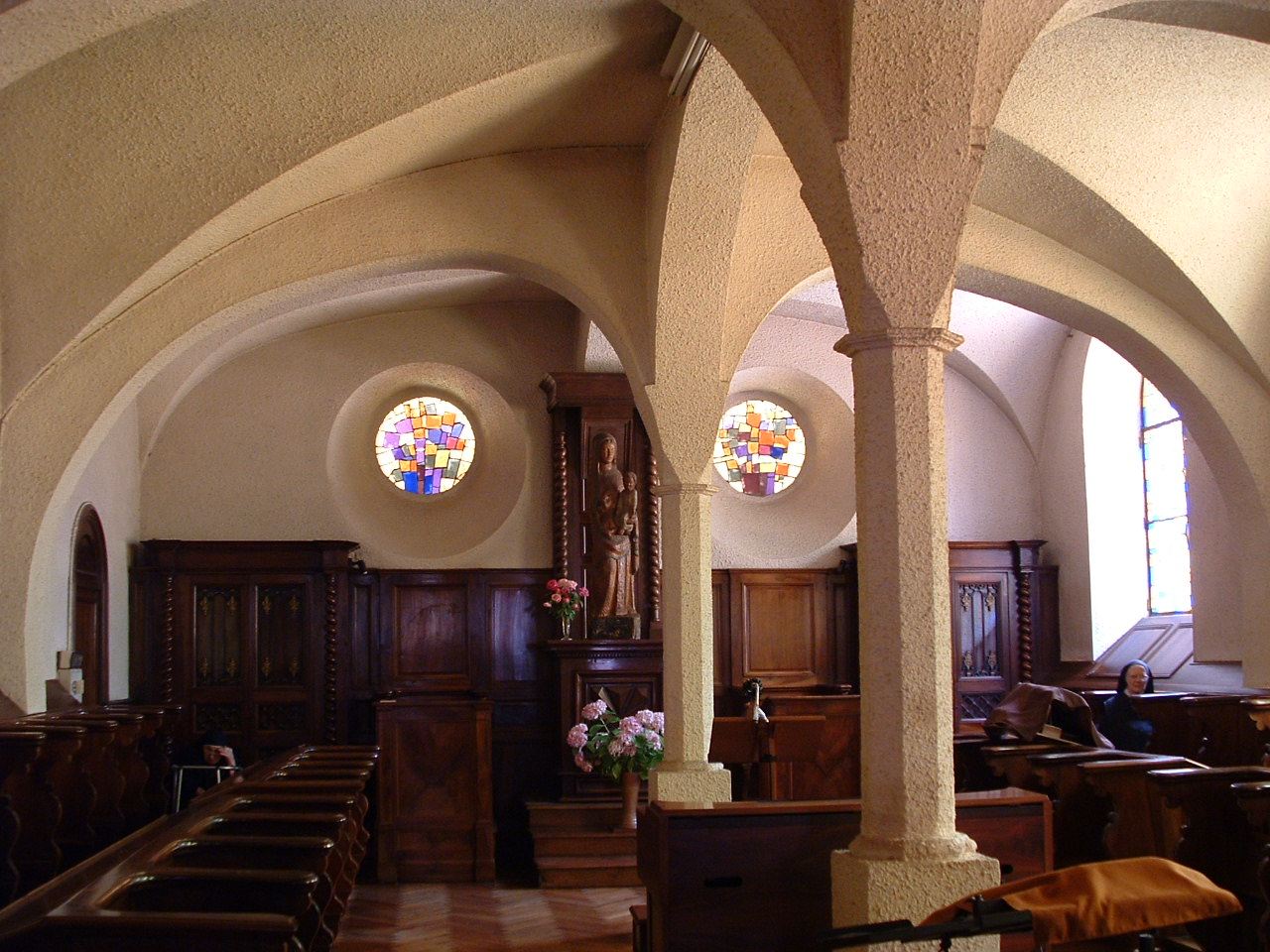
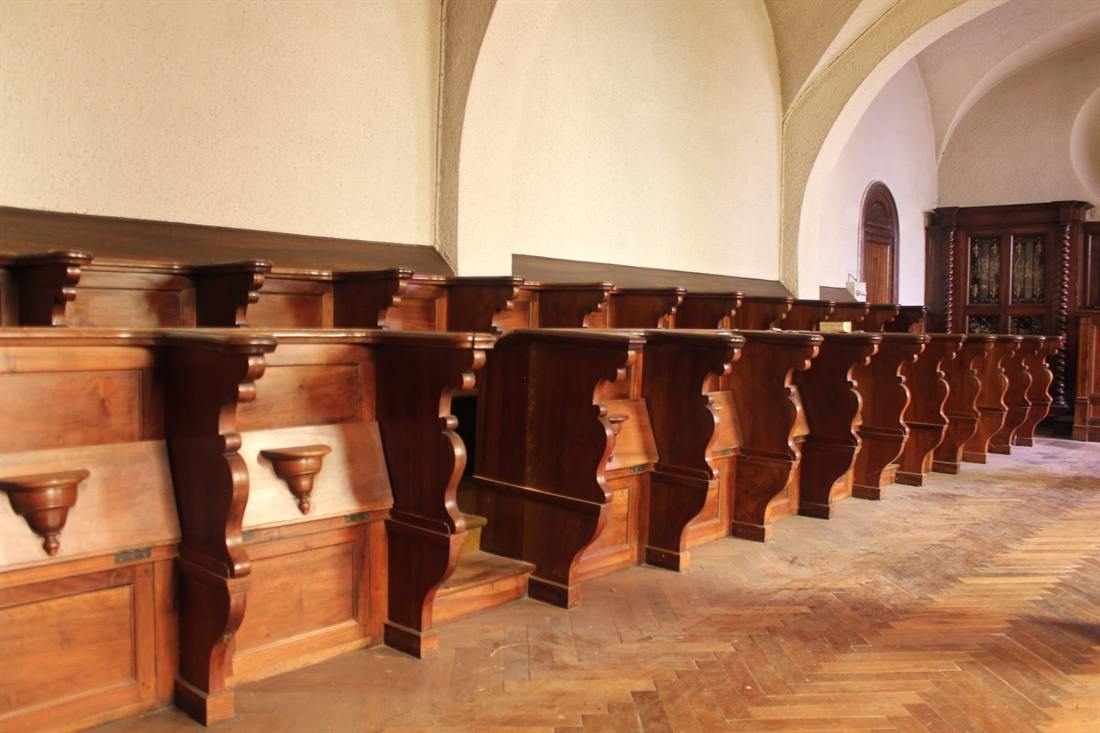
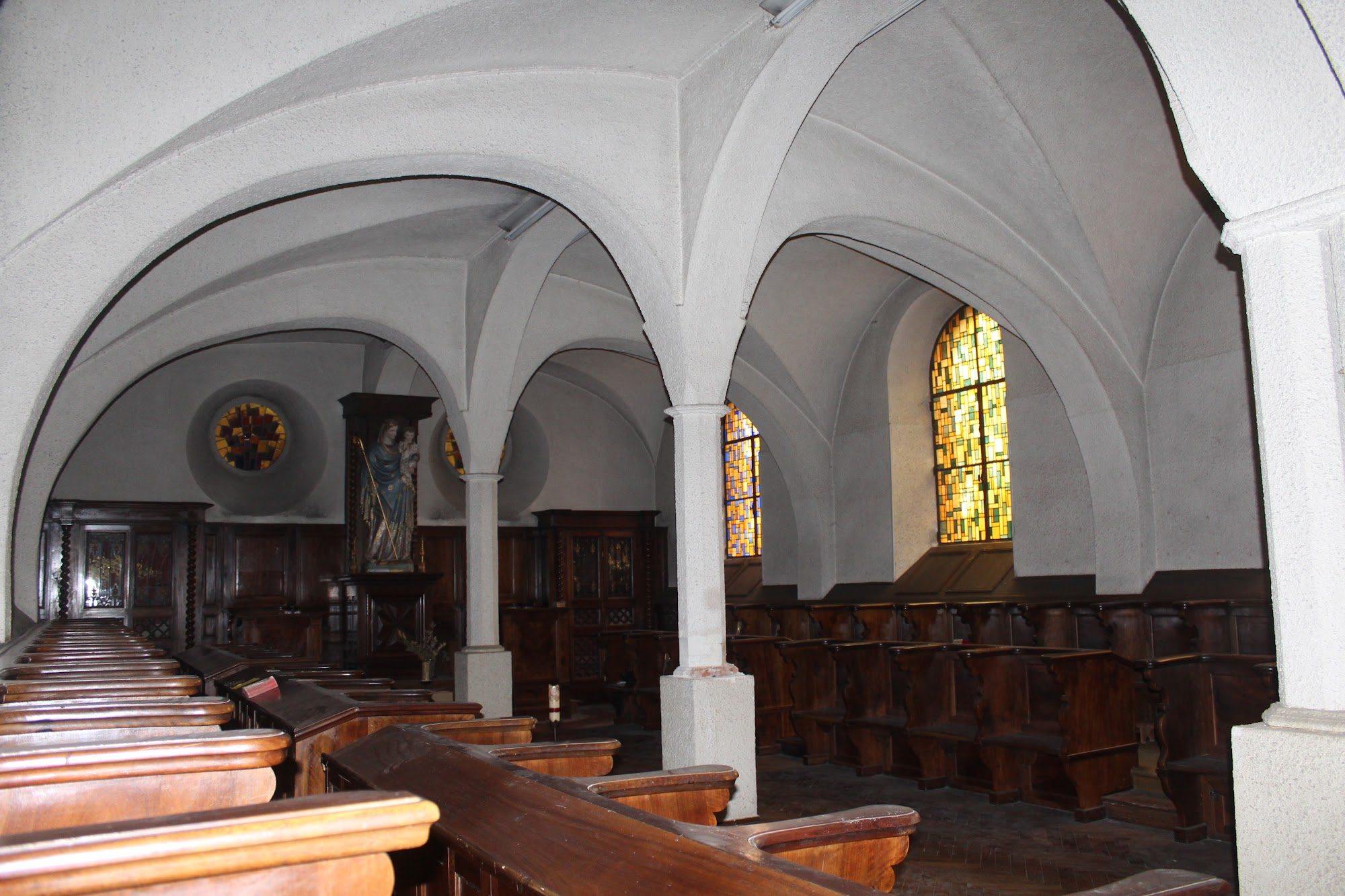
For nearly a century, nuns sang the Office in the choir of the chapel of Saint-Pierre and adored the Blessed Sacrament, day and night, in the buildings of the old abbey. They belonged to the institute of the Benedictine Nuns of the Perpetual Adoration of the Most Blessed Sacrament. The association Abbatia Sancti Petri de Curte was founded so that prayer might begin again where they had carried it.
Mother Mectilde of the Blessed Sacrament
The institute was born in Paris in the seventeenth century. Its foundress, Catherine de Bar (1614–1698), in religion Mother Mectilde of the Blessed Sacrament, came from Lorraine. Driven out by the wars that laid Lorraine waste, she reached Paris with a few sisters in 1651. In 1653 royal letters patent authorised a monastery devoted to the perpetual adoration of the Blessed Sacrament, under the protection of Queen Anne of Austria. Pope Innocent XI approved the institute by the bull Militantis Ecclesiæ of 10 December 1676.
A Benedictine life turned towards the Eucharist
The nuns follow the Rule of Saint Benedict: the Divine Office sung in choir, silence, work and common life under a prioress. The institute adds a calling of its own: the adoration of the Blessed Sacrament exposed, kept without interruption by sisters taking turns before the altar, in a spirit of reparation for the outrages done to the Eucharist. Suppressed at the Revolution, the monasteries of the institute were restored in the nineteenth century and later grouped in federations; the French federation still counts several monasteries today.
From the monastery of the Sacred Heart to Mas-Grenier
The community that settled at Mas-Grenier was that of the monastery of the Sacred Heart, erected in 1817. Like many French religious communities at the beginning of the twentieth century, it had to leave France: in 1904 the nuns went into exile in Spain. They returned in 1921 and settled in the old abbey of Saint-Pierre at Mas-Grenier, sold as national property in 1791, which then came to life again in a new form: a monastery of nuns.
The war years
In 1944 the bombing of the Toulouse area damaged the monastery of the Poor Clares of Toulouse, and one sister was killed. The Poor Clare community was then received by the Benedictine nuns of Mas-Grenier until it returned to its restored monastery in Toulouse in 1945.
At the same time, Mgr Pierre-Marie Théas, bishop of Montauban from 1940, spoke out publicly against the persecution of the Jews (pastoral letter of summer 1942); he was later recognised as Righteous Among the Nations. Accounts published online say that the abbey of Mas-Grenier was among the religious houses that then served as places of refuge; we have not yet found a reliable documentary source for this.
The departure
In 2014 the community, now small in number, left Mas-Grenier; it was united with the monastery of the Benedictine nuns of Erbalunga in Corsica, founded in 1862 and joined to the institute in 1951. The buildings were sold. The stalls, the choir and the wing where the nuns lived remain: the Saint-Michel House now occupies that wing, close to the choir.
Sources
This page draws on the public sources listed below. The dates of 1817 and of the exile in Spain (1904–1921) come from online notices; they still need to be checked in the archives of the community and of the diocese of Montauban. Any correction or document may be sent to ac@abbayesaintpierre.org.
- Bénédictines de l’Adoration perpétuelle du Très-Saint-Sacrement, French Wikipedia: foundation, approval of 1676, list of monasteries (“monastery of the Sacred Heart of Mas-Grenier, erected in 1817, then united with Erbalunga”).
- Mas-Grenier, French Wikipedia: monastic life restored by the Benedictines of the Blessed Sacrament from 1921 (the article gives 2013 for the departure; the community left Mas-Grenier in 2014).
- Monastery of St Clare at Toulouse, Service des moniales de France: the Poor Clares received at Mas-Grenier in 1944–1945.
- Monastery of the Benedictine nuns of Erbalunga, Corsicathèque: founded in 1862, joined to the institute in 1951.
- For the earlier history of the abbey: the Conservatoire du Patrimoine des Abbayes.